

I’ve been installing water softeners since 1999. In that time, I’ve worked in hundreds of homes across Suffolk, Essex, Cambridgeshire, and Norfolk. I’ve pulled out failed systems, repaired neglected ones, and watched families genuinely benefit from getting the right unit fitted properly.
So when people ask me which water softener to buy, I don’t give them a generic answer. I tell them what I tell every customer who calls Hart Water: the best water softener is the one that suits your household size, your water hardness, your plumbing setup, and your budget. Full stop.
That said, certain models keep coming up as the right answer, again and again. Here are the five I recommend most often, and why.
What Separates a Good Water Softener From a Great One
Before I get into specific models, I want to explain how I assess them. Because the marketing around water softeners can be misleading. Every manufacturer claims their unit is the most efficient, the most reliable, the most compact. After 20 years of seeing what actually holds up in the field, I use a different checklist.
Salt efficiency. How much salt does the unit use per litre of softened water it produces? This directly affects your running costs. A poor performer can use twice the salt of a good one over a year.
Regeneration type. Some softeners regenerate on a timer — they flush and recharge at set intervals regardless of how much water you’ve used. Demand-initiated units only regenerate when they need to, based on actual usage. Demand-initiated is almost always better for most households.
Twin cylinder vs. single cylinder. A twin-cylinder softener uses one cylinder while the other regenerates, so you always have softened water. A single-cylinder unit has a brief period during regeneration where hard water passes through. For most homes this isn’t a major issue, but for businesses like cafes or pubs, it matters.
Build quality and servicing. Can parts be sourced easily in five years’ time? Is the manufacturer still trading, and do they have a UK service network? I’ve seen cheap imports cause more trouble than they’re worth within three years.
Salt type compatibility. Most quality softeners accept block salt or tablet salt. Some are designed specifically for one type. This affects convenience and ongoing cost.
East Anglia and North London sit in some of the hardest water areas in the UK. According to Anglian Water, hardness levels across the region frequently exceed 300 mg/l as calcium carbonate — that’s classified as very hard. At that level, limescale builds fast. Your boiler, washing machine, dishwasher, and shower head are all taking a hit every single day without a softener in place.
That’s the environment I’m working in. These five models are the ones I trust in those conditions.
The Top 5 Water Softener Models Worth Considering
1. Harvey Water Softener (Arc / TwinTec S5)
If I had to name one model that has consistently impressed me over the years, it’s the Harvey water softener. The company has been manufacturing in the UK since 1978, and their twin-cylinder, non-electric design is genuinely clever engineering.
The Harvey Arc — also sold as the TwinTec S5 and, under some suppliers, as the Harvey Cobalt — uses two resin cylinders that alternate. While one is in use, the other regenerates. This means you have soft water continuously, 24 hours a day. There’s no timer and no hard water bleed during regeneration.
It runs on block salt, which I actually prefer for most customers. Blocks are cleaner to handle, easier to store, and the Harvey uses them very efficiently. The unit itself has no electrical components, which removes a whole category of potential failures.
The footprint is compact. I’ve fitted these in undersink cupboards where nothing else would go. For East Anglian homes — many of which have older kitchens with limited space — that matters.
Where it works best: Most households. Particularly good for families and any home where continuous soft water is a priority.
Consideration: Only compatible with Harvey block salt. You need to commit to that salt format.
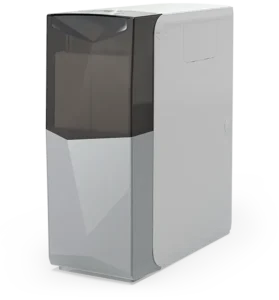
2. Kinetico Premier Series
Kinetico is a brand I’ve always respected. They pioneered non-electric, demand-initiated softening, and their engineering philosophy has remained consistent for decades.
The Premier Series is their flagship residential range. Like the Harvey, it uses twin cylinders and runs without electricity. It regenerates based on actual water usage — not a clock — which means it only uses salt and water when genuinely needed. In a household where water use varies a lot (holidays, guests, busy periods), this can make a meaningful difference to running costs.
Kinetico units are built to last. I’ve serviced systems that are well over 15 years old and still performing well. The internal components are quality, and Kinetico has a proper UK service network. That second point matters more than most people realise when they’re buying.
The Premier Series handles very high hardness levels without issue, which is exactly what you need in this region.
Where it works best: Larger households with variable water use. Also a strong choice for small businesses.
Consideration: Higher upfront cost than some alternatives. Worth it for longevity, but it’s an investment.
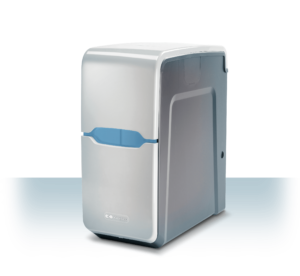
3. EcoWater ERR 3700
The EcoWater water softener range is part of the Marmon Group, and their ERR 3700 is one of the more technically advanced single-cylinder units available in the UK market.
What sets it apart is the smart technology. The ERR 3700 monitors your water usage patterns and adapts its regeneration schedule accordingly. It also features remote diagnostics — I can actually check certain parameters without needing to visit the property in person for every minor query. For customers who want a bit more visibility over how their system is performing, this is a strong option.
It accepts tablet salt, which is the most widely available format and often the most cost-effective. Tablet salt is what most people are already buying at the supermarket or from their local builder’s merchant, so the transition is simple.
Salt efficiency on the ERR 3700 is good. It’s a metered unit, so it doesn’t regenerate unless it needs to, and the technology helps it optimise each regeneration cycle.
Where it works best: Technically minded homeowners who want data and control. Also practical for properties where I’m providing a managed service contract, because remote monitoring saves time.
Consideration: It does require a power connection, unlike the Harvey or Kinetico. If you lose power, the unit will still function but the smart features won’t.
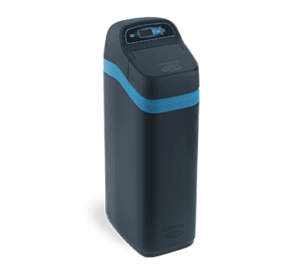
4. Monarch Midi HE
The Monarch Midi HE sits in the mid-range price bracket and delivers solid performance for what it costs. It’s a single-cylinder, electric unit with demand-initiated regeneration.
I recommend this one regularly to customers who have a clear budget ceiling but still want a reliable, properly specified softener — not one of the cheap internet units that I end up having to replace within three years.
The HE in the name stands for High Efficiency, and Monarch has put genuine work into the salt and water consumption figures on this model. It’s a meaningful step up from their older timer-based units.
Build quality is good. Parts availability in the UK is fine, and I’ve found Monarch’s technical support to be responsive when I’ve needed it. For a straightforward family home, this does the job well.
Where it works best: Cost-conscious households who want quality without paying for features they don’t need. Good for properties where space isn’t a major constraint.
Consideration: Single cylinder means there’s a short regeneration period where the supply briefly reverts. For most households this is fine — it typically happens in the early hours of the morning.
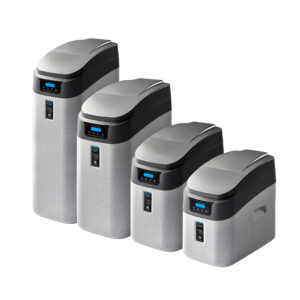
5. BWT WS355
BWT is an Austrian company with a strong presence in the UK. Their WS355 is a compact, demand-initiated softener that I’ve fitted successfully in a range of properties, including some of the smaller Victorian and Edwardian terraces that are common across North London and parts of Essex.
It handles tablet salt, operates on a metered basis, and the build quality is solid. BWT have invested in their UK infrastructure over the years, so getting parts and support isn’t the headache it can be with some European brands.
The WS355 is particularly well-suited for smaller households — one or two people, or a property with moderate water consumption. It’s efficient at lower volumes, which means the running costs stay reasonable even if you’re not using huge amounts of water.
I’d also mention this one for rental properties and buy-to-let situations. It’s a reliable, lower-maintenance option where the landlord wants good protection for their plumbing without ongoing complexity.
Where it works best: Smaller households, rental properties, and urban homes with limited installation space.
Consideration: For a large family or a property with very high water demand, you’d want to step up to one of the larger-capacity units above.
Which Model Is Right for Your Home or Business?
There’s no single answer. What works for a four-bedroom family home in Bury St Edmunds is different from what works for a cafe in Hackney or a two-bed flat in Chelmsford.
Here’s a simple way to think about it:
- Large family home, continuous soft water a priority: Harvey Arc or Kinetico Premier
- Variable household with budget for a quality unit: Kinetico Premier
- Technologically minded homeowner who wants monitoring: EcoWater ERR 3700
- Solid mid-range option for a standard family home: Monarch Midi HE
- Smaller property, rental, or budget-conscious buyer: BWT WS355
The Drinking Water Inspectorate publishes guidance on water quality standards in England and Wales, and their data consistently shows that the South East and East of England supply some of the hardest water in the country. You can read more about water quality standards at the DWI’s official site.
This isn’t a small inconvenience — hard water at 300+ mg/l causes real, measurable damage to appliances and pipework over time. According to Anglian Water’s own hardness data, much of their supply area falls into the very hard category. That’s the reality for most of my customers across Suffolk, Norfolk, and Cambridgeshire.
The Water Regulations Advisory Scheme (WRAS) also provides approval guidance for water treatment products used in the UK. Any softener you fit should be WRAS-approved. You can check the approved products register at wras.co.uk. All five models I’ve listed here meet that standard.

Final Thoughts From Someone Who’s Done This Every Day for 25 Years
I’m not here to sell you the most expensive unit on this list. I’m here to help you make a good decision for your home or business.
What I will say is this: a poorly specified softener, or one that’s installed badly, won’t give you the results you’re paying for. The unit matters, but so does the installation. The bypass valve, the salt dosage settings, the position relative to your cold water main — all of it affects performance.
That’s why I offer a free site survey to anyone in our area before recommending anything. I come and look at your plumbing, check your water hardness, understand your household, and give you an honest recommendation. No pressure, no upselling.
If you’re in East Anglia, North London, or Essex and you’re ready to stop fighting limescale, get in touch with Hart Water. A quick phone call or a message through our site is all it takes to get started.

- Water Softener Shower Heads - September 4, 2026
- Water Softener vs Water Conditioner - July 7, 2026
- Water Softener Price Guide UK: Real Installation Costs in East Anglia - May 7, 2026


