
Water Softener Price Guide UK: Real Installation Costs in East Anglia
If you’re after a straight answer, here it is.
A quality water softener in East Anglia typically costs between £900 and £2,500 supplied and fitted, with most homeowners paying around £1,400 to £1,800 for a properly installed, mid-range twin-cylinder system from a reputable brand like Kinetico, Harvey’s, or EcoWater.
Budget single-cylinder electric models start lower, around £500 to £800 fitted.
Premium high-flow units for larger homes can push past £3,000.
That’s the headline.
The rest of this article explains why those numbers vary so much, what you should expect from a fair quote, and how to avoid paying for the wrong system.
I’m Adrian Hart.
I’ve been installing and servicing water softeners across Suffolk, Norfolk, Cambridgeshire, Essex, and Hertfordshire since 1999.
My wife Jackie and I started Hart Water in 2012 because we got tired of seeing customers sold the wrong kit at the wrong price.
So this isn’t a sales pitch dressed up as a blog.
It’s the same advice I’d give a neighbour over the garden fence.

Why East Anglia Homeowners Need to Take This Seriously
Before we get into pricing, you should know what you’re up against.
The British Geological Survey classifies most of East Anglia as a “very hard” water area, with calcium carbonate concentrations frequently above 300 mg/l.
You can check your own postcode on your water supplier’s hardness map — for example, Affinity Water’s hardness checker or Anglian Water’s water hardness page will tell you exactly what’s coming out of your taps.
You can also view our hard water map UK guide.
Here’s what that means in practice.
Hard water deposits limescale inside your boiler, immersion heater, kettle, dishwasher, washing machine, and every pipe in between.
Learn more about hard water plumbing problems.
The Department for Energy Security and Net Zero has previously highlighted that just a few millimetres of scale on a heating element can reduce its efficiency by a noticeable margin, pushing up your gas or electricity bills.
The Drinking Water Inspectorate also confirms that while hard water is safe to drink, the scale it leaves behind causes real damage to plumbing systems.
So when you’re weighing up the cost of a water softener, you’re not just buying a luxury.
You’re buying back appliance lifespan, energy efficiency, and a lot of weekend cleaning time.
What You’ll Actually Pay for a Water Softener in East Anglia
Let’s get specific.
UK pricing is very different from the American figures you’ll see floating around online, so ignore those.
Here’s what real installations cost in our region right now.
Budget electric single-cylinder softeners (supplied and fitted): £500 – £900
These are timer or meter-controlled single-tank units.
They regenerate at set times, usually overnight, and during regeneration you have no soft water available.
They need an electrical supply near the unit.
Fine for a small flat or a weekend cottage.
Not ideal for a family of four who all want showers in the morning.
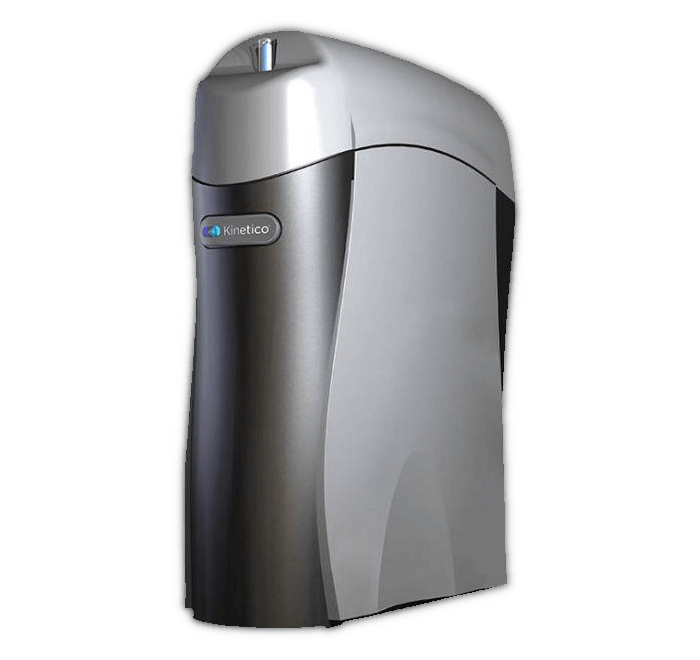
Mid-range twin-cylinder non-electric softeners (supplied and fitted): £1,200 – £2,000
This is where most of my customers land.
Brands like Kinetico, Harvey’s TwinTec, and EcoWater dominate this bracket.
Twin-cylinder means you get soft water 24/7 because one tank is always on standby while the other regenerates.
They’re block-salt fed, no electricity required, and they only regenerate when you’ve actually used water.
Far more efficient on salt and water consumption.
High-capacity or high-flow systems (supplied and fitted): £2,200 – £3,500+
Larger homes with five or more bathrooms, properties with high simultaneous demand, or small commercial premises like cafes and B&Bs need more capacity.
Expect to pay accordingly.
The Real Cost Bands (And What Sits Behind Them)
The price gap between a £600 unit and a £2,000 unit isn’t just brand snobbery.
Here’s what you’re actually paying for as you move up the bands.
- Resin quality. Cheap softeners use lower-grade ion-exchange resin that breaks down faster. Premium brands use higher-cross-linked resin rated for longer life and chlorine resistance.
- Valve engineering. The valve is the brain. Kinetico’s non-electric valves, for example, have been refined over decades and carry long warranties because they rarely fail.
- Twin vs single cylinder. Twin gives you uninterrupted soft water and uses less salt because regeneration is metered to actual usage.
- Warranty. A two-year warranty versus a ten-year warranty tells you a lot about what the manufacturer expects from the product.
- Salt type. Block-salt machines (most twin-cylinder units) are easier to top up — two neat blocks in a clean cabinet. Tablet-salt machines need a 25kg sack hauled into the cupboard. That matters when you’re 70 and the softener lives in the garage.
If a quote looks suspiciously cheap, ask which brand, which model, what warranty, and what’s in the installation.
The answers will tell you everything.
Water Softener Installation Cost: What’s Included and What Isn’t
A fair installation quote should cover everything needed to get the unit working properly and legally.
Here’s what should be in it.
- A WRAS-approved installation kit with bypass valve, isolation valves, and check valves. The Water Regulations Advisory Scheme sets the standards every UK installer should be working to.
- A drinking water tap kept on the rising main (your kitchen cold tap), so unsoftened water remains available for drinking and cooking.
- A drain connection for the regeneration discharge, with the correct air gap to comply with Water Supply Regulations.
- All pipework modifications, usually in 22mm or 15mm copper or compatible plastic.
- Commissioning, testing, and a walk-through with you so you know how to add salt and what to expect.
Read our full guide to water softener installation.
A standard installation in a property where the rising main is accessible, with a nearby drain and a sensible cupboard or garage location, takes me three to four hours.
The labour cost typically falls between £250 and £450 depending on complexity.
Where installations get more expensive is when the plumbing isn’t friendly.
If your stopcock is buried under the kitchen units, if the rising main runs through a concrete floor, or if you want the softener fitted in a garage 15 metres from the supply, you’re looking at extra labour and materials.
A good installer will spot all of this on a free site survey before quoting, so there are no nasty surprises on the day.
One thing worth flagging: avoid anyone who quotes you over the phone without seeing the property.
I’ve been called out to fix too many botched jobs where the original installer didn’t bother surveying first.
Running Costs, Servicing, and the Long-Term Maths
The purchase price is only part of the picture.
Here’s what ownership actually costs over the years.
Salt: A typical family of four uses around £40 to £80 of salt per year with a modern twin-cylinder softener.
Block salt costs roughly £6 to £8 for a pack of two blocks.
Tablet salt is cheaper per kilo but most homes use more of it.
Water and electricity: Non-electric softeners use no power at all.
The water used during regeneration is small — modern metered units only regenerate when needed.
Budget on a few pounds a year, not hundreds.
Servicing: A quality twin-cylinder softener needs very little.
I recommend a service every two to three years to check the valve, clean the brine cabinet, and inspect for leaks.
Expect £80 to £150 per visit.
Resin replacement: With good-quality resin and properly maintained equipment, you should get 12 to 20 years before any resin replacement is needed.
On cheaper units, that figure drops sharply.
Now the savings side.
Independent research summarised by the British Water trade body has long shown that softened water reduces detergent and soap use significantly, extends appliance life, and improves heating efficiency.
A scaled-up combi boiler works harder, costs more to run, and fails sooner.
Replacing a boiler costs £2,500 to £4,000.
Replacing a softener resin bed costs a fraction of that.
Most of my customers tell me their softener pays for itself within five to seven years through reduced energy bills, fewer appliance repairs, and lower spend on cleaning products, descalers, and bottled toiletries.
After that, it’s pure savings.
What Affects Your Final Quote
When I do a survey, here’s what I’m looking at to put a price together.
- Household size and water usage. A two-person household has very different needs from a family of six.
- Number of bathrooms. More bathrooms means higher peak flow demand.
- Existing plumbing layout. Where the rising main enters, where the stopcock sits, and where the nearest drain runs.
- Preferred location. Under-sink, garage, utility cupboard, or outhouse. Each has different access and pipework implications.
- Water hardness level. Higher hardness means the softener regenerates more often, so capacity matters.
- Whether you want a separate drinking water tap fitted. Many customers add a filtered drinking tap at the same time. Budget another £250 to £450 for that, fitted.
A proper survey takes me 30 to 45 minutes.
I don’t charge for it, and I don’t pressure-sell.
If the right answer is “your existing softener just needs a service,” that’s what I’ll tell you.
Common Pricing Traps to Watch Out For
After 25 years of this, I’ve seen every sales tactic going.
Here are the ones that catch people out.
- The “free softener” offer. Nothing is free. The cost is buried in inflated salt contracts, finance agreements, or service plans you can’t easily exit.
- High-pressure in-home demos. If a salesman is in your kitchen for two hours doing soap tests and waving a contract, walk away. Reputable installers give you a written quote and let you think about it.
- Lifetime warranties with conditions. Read the small print. Some “lifetime” warranties become void if you don’t use the manufacturer’s own salt at premium prices.
- Vague quotes. A proper quote lists the model, the installation kit, the labour, the warranty terms, and any extras. Anything less and you’re guessing.
- Brands you’ve never heard of at suspicious prices. There are good budget brands. There are also rebadged imports with no UK service network. When something fails in year three, you want a manufacturer who’s still around and parts that are still available.
Brand Comparison: What You’re Actually Choosing Between
I’m independent, so I’ll fit whichever brand suits the customer.
Here’s my honest take on the main players.
Kinetico — Non-electric, twin-cylinder, exceptional reliability, long warranties. The premium choice. Higher upfront price but lowest lifetime cost in my experience.
Harvey’s / TwinTec — British-made, non-electric, twin-cylinder, block salt. Compact and reliable. Excellent for smaller utility cupboards.
EcoWater — Electric, often single-cylinder with smart metering. Strong on efficiency and connectivity. Good mid-range option.
Budget electric single-cylinder brands — Fine for low-demand homes on a tight budget. Just go in with realistic expectations on lifespan and capacity.
The right brand depends on your home, your usage, and your budget — not on which manufacturer pays the highest commission.
That’s why I stayed independent.
Our water softener buying guide explains the differences in more detail.
How to Get an Honest Quote
If you’re in Suffolk, Norfolk, Cambridgeshire, Essex, or Hertfordshire and you’re weighing up a water softener, here’s what I’d suggest.
- Check your water hardness using your supplier’s online tool.
- Make a quick list of your priorities — uninterrupted soft water, low maintenance, smallest footprint, lowest price, and so on.
- Get two or three quotes from independent local installers, not just the big national brands’ direct sales teams.
- Insist on a free site survey before any quote.
- Ask about WRAS-approved installation, warranty terms, and aftercare.
- Take 48 hours to think before signing anything.
A good installer will be happy with all of that.
Anyone who isn’t, isn’t the right installer.
The Bottom Line on Water Softener Pricing
For most homes in East Anglia, a properly specified, professionally fitted twin-cylinder water softener from a quality brand will cost £1,400 to £1,800 all-in.
That figure buys you 15-plus years of soft water, lower energy bills, longer-lasting appliances, and a much easier life when it comes to cleaning bathrooms and kitchens.
Pay less and you might get away with it, or you might be replacing the unit in five years.
Pay more and you’re either getting a high-capacity system you genuinely need, or you’re being overcharged.
The middle of the market is where the value lives, and a good independent installer will steer you there.
If you’d like a free, no-pressure site survey and a written quote with no sales theatre, give Hart Water a call or drop us a message through the website.
Jackie usually picks up the phone, I’ll come out and do the survey, and our son Jack will likely be on the install.
Three generations of one family, and we’ll treat your home like we’d treat our own.
That’s the Hart Water way, and it’s how we’ve built the business since 2012.


