
Water Softener vs Water Conditioner: An Installer’s Honest Guide for UK Homes
If you’re wondering whether you need a water softener or a water conditioner, here’s the honest answer.
They are not the same thing.
A water softener removes the calcium and magnesium from your water using ion exchange, so you get genuinely soft water and no limescale.
A water conditioner leaves those minerals in the water and only changes how they behave, so the water stays hard and scale is reduced rather than removed.
Softeners eliminate limescale. Conditioners reduce it.
A softener costs roughly £900 to £2,500 fitted. A conditioner costs roughly £200 to £900.
For most homes in a hard water area like East Anglia, a softener is the right long-term choice.
I’ve lost count of the number of kitchens I’ve stood in across Suffolk, Essex, Norfolk and Cambridgeshire where someone has pointed at a small device on their rising main and said, “Adrian, the last chap told me this was a water softener.”
Nine times out of ten, it isn’t. It’s a water conditioner.
Mixing them up costs people money and leaves them wondering why the kettle still furs up.
I’m Adrian Hart.
I’ve been installing and servicing water treatment across Suffolk, Norfolk, Cambridgeshire and Essex since 1999.
My wife Jackie and I started Hart Water in 2012 because we were tired of seeing people sold the wrong kit at the wrong price.
This is the same advice I’d give you at your kitchen table on a free survey.
Water Softener vs Water Conditioner: The Difference at a Glance
If you read nothing else, read this.
- How it works: a softener uses ion exchange to remove the hardness minerals; a conditioner uses a magnet, an electronic coil, or TAC media to change how those minerals behave.
- Effect on hardness: a softener removes it completely, leaving zero hardness; a conditioner leaves the minerals in, so the water stays hard.
- Limescale: a softener eliminates it; a conditioner reduces it and makes any scale easier to wipe away.
- Soft-water benefits like lather, softer skin and cleaner glassware: full with a softener, little to none with a conditioner.
- Salt: a softener needs roughly one to two blocks a month; a conditioner needs none.
- Electricity: usually none for either, on modern non-electric softeners.
- Wastewater: a softener uses a little extra during regeneration, around 5%; a conditioner uses none.
- Space: a softener needs an under-sink, garage or utility spot; a conditioner fits inline on the pipe.
- Typical install cost: £900 to £2,500 for a softener; £200 to £900 for a conditioner.
- Running cost: salt at roughly £8 to £15 a month for a softener; usually zero for a conditioner.
- Lifespan: 15 to 20+ years for a softener; variable for a conditioner, and magnetic units can fade over time.
- Best for: a softener suits most homes wanting full soft water and appliance protection; a conditioner suits tight spaces, rentals, or a no-salt preference.
What Is the Difference Between a Water Softener and a Water Conditioner?
A water softener removes the hardness minerals from your water. A water conditioner does not.
That is the difference in one sentence, and almost everything else follows from it.
East Anglia sits in one of the hardest water regions in the UK.
Anglian Water classify the vast majority of our supply area as hard or very hard, with calcium carbonate levels frequently above 300 mg/l.
If you’re reading this anywhere between Norwich and Chelmsford, you are almost certainly in a hard water area.
That is exactly why getting this choice right matters here more than most places.
How Ion Exchange Softeners Really Work (And What Regeneration Means)
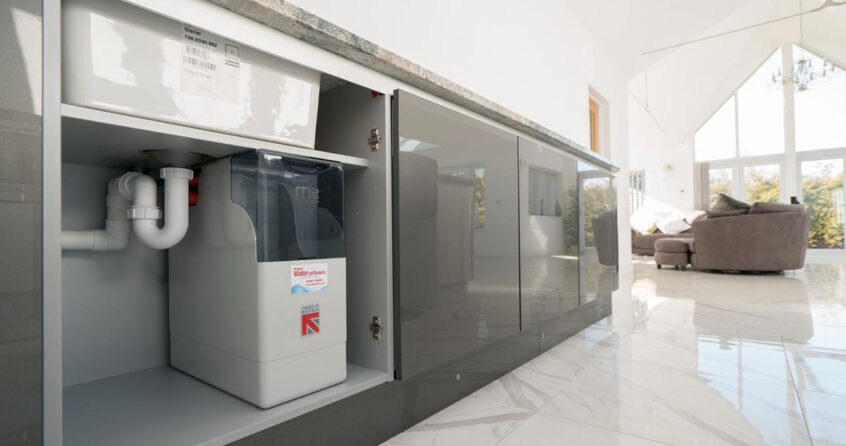
A traditional water softener is a proper appliance.
It contains a resin tank filled with thousands of tiny beads.
When hard water passes through, those beads grab the calcium and magnesium and swap them for sodium from the salt you top up.
That is ion exchange.
The water coming out the other side has zero hardness. Not reduced hardness. Zero.
Every few days, depending on how much water you use, the softener runs a regeneration cycle.
Salty water flushes through the resin, washes away the calcium and magnesium, and resets the beads for the next batch.
Depending on the size of the unit and your usage, this typically happens every 2 to 10 days.
Here are the questions people always ask me.
Salt use: a family of four typically gets through one or two 8kg blocks a month. Not a lot. Our guide to salt and salt-free systems goes deeper.
Water use: you’ll use around 5% more water because of the regeneration flush.
Electricity: most modern non-electric softeners like Kinetico or Harvey use the flow of the water itself to trigger regeneration, so there is zero running electricity cost. See our electric vs non-electric softeners guide.
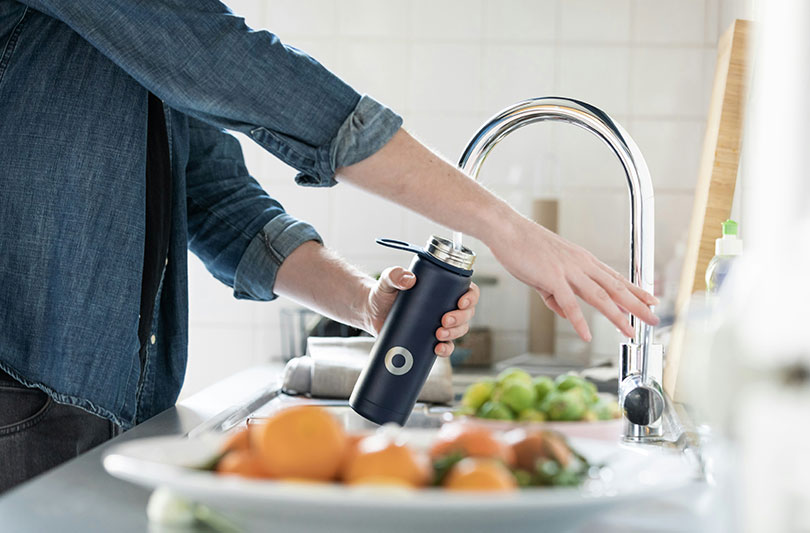
Drinking water: I always fit a separate hard water tap at the kitchen sink for drinking and cooking. That is standard practice and it deals with the sodium concern most people raise.
The result is water that lathers beautifully with a fraction of the soap, softer laundry, and showers that leave no scum on the tiles.
Most importantly, your boiler and appliances stop scaling up.
That last point is where the real money is.
Even 1.6mm of limescale on a heating element can increase energy use by around 12%, according to the Carbon Trust.
In an East Anglian home, scale builds fast.
What a Water Conditioner Actually Does
A water conditioner is a completely different beast.
Most are compact devices.
Some are just a short section of pipe with a magnet or an electronic coil wrapped around it.
Others use a media called TAC (template assisted crystallisation) inside a small cartridge.
None of them remove minerals from your water.
What they do is alter the structure of the calcium and magnesium so those minerals are less prone to sticking to surfaces.
That is the honest reality: the water is still hard.
You’ll still see spotting on glassware, and soap will still struggle to lather.
But the scale that does form will be softer, less crusty, and easier to wipe away.
Conditioners do have genuine strengths.
- No salt to buy or carry
- No electricity on most models
- No wastewater from regeneration
- Compact size, often the length of a forearm
- Little maintenance beyond an occasional media change on some models
The trade-off is simple.
You don’t get soft water. You get hard water with better manners.
For a small commercial premises where space is tight, or a holiday let where nobody wants to top up salt, that can be a fair compromise.
For most homeowners who want the full quality-of-life benefits of soft water, it isn’t.

Which One Is Right for Your East Anglian Home or Business?
The right answer depends on what you’re trying to achieve, what your plumbing looks like, and how much hassle you’re willing to take on.
Choose a Water Softener If You…
- Want to eliminate limescale, not just reduce it
- Are protecting an expensive boiler, underfloor heating, or a combi system
- Care about softer laundry, better lathering soap, and cleaner glassware
- Have space under the sink, in a garage, or in a utility
- Are happy to top up salt every few weeks
- Live in a very hard water area, which is most of East Anglia
Softeners are the right call for the majority of homes I visit.
The Water Regulations Advisory Scheme (WRAS) approves the main brands, and a properly installed unit lasts 15 to 20 years easily.
I’ve serviced softeners I fitted nearly two decades ago that are still running perfectly.
If you want to compare specific units, our honest view of the top 5 water softener models walks through the ones I stand behind.
Choose a Water Conditioner If You…
- Have very limited space and cannot fit a proper softener
- Cannot or will not manage salt top-ups (some elderly clients prefer this)
- Are in a rental property where a full install isn’t practical
- Want some scale reduction without the running costs
- Are not too fussed about softer skin, better lather, or spotless glassware
I fit conditioners now and again. They have a place.
But I always tell customers honestly what they will and won’t get.
If someone expects soft water from a conditioner, they’ll be disappointed, and I’d rather manage that on day one than argue about it six months later.
The Real-World Costs, Maintenance, and Results You Can Expect
Let’s talk money, because that’s what everyone wants to know.
Water softener, typical costs:
- Installation: £900 to £2,500 depending on brand and complexity, with most homeowners around £1,400 to £1,800 for a mid-range twin-cylinder unit. Our full water softener price guide for East Anglia breaks this down.
- Salt: £8 to £15 a month for a family of four
- Servicing: a check every few years is sensible, and most non-electric units are very reliable
- Lifespan: 15 to 20+ years with basic care
Water conditioner, typical costs:
- Installation: £200 to £900 depending on the type
- Running costs: usually zero, though TAC media may need replacing every 3 to 5 years
- Lifespan: varies widely, and some magnetic units lose effectiveness over time
Here’s the bit the sales brochures don’t tell you.
The savings from a proper softener aren’t in the softener itself. They’re in what it protects.
Boilers that scale up run less efficiently, meaning higher gas bills.
Immersion heaters fail sooner.
Washing machines and dishwashers pack up years before they should.
Shower heads, tap cartridges, kettles and coffee machines all suffer in hard water.
I had a customer in Bury St Edmunds who was replacing kettle elements every eight months and had already lost one dishwasher in three years.
Two years after fitting his softener, the kettle he bought the same week as the install was still going strong.
That is not a testimonial I asked for. He told me at his service visit.
What Difference Does It Actually Make Day to Day?
Soft water genuinely changes how your home feels.
Because soap is no longer reacting with calcium and magnesium, it lathers properly and rinses away completely.
- Less soap scum on shower screens and tiles
- Cleaner glassware without spots
- Softer towels and clothes without needing fabric conditioner
- Less product needed for showering, washing hair, and cleaning
- Skin that doesn’t feel as tight after a shower
A conditioner won’t give you any of that reliably, because the minerals are still in the water, still reacting with your soap.
If skin is your main concern, our article on the skin benefits of soft water covers it in detail.
Installation: What’s Actually Involved?
For a softener, the install taps into your rising main after the stopcock, ideally before it branches off to the kitchen tap, so your drinking water stays hard.
We need a drain nearby for the regeneration waste, and space for the unit.
Most jobs take me half a day. Awkward layouts run longer.
Sizing matters too, and our water softener size guide explains how to get it right.
For a conditioner, it’s usually simpler, often just cutting into the main and fitting the unit inline.
An hour or two, typically.
Common Myths About Softeners and Conditioners
Let me clear up a few things that come up in almost every consultation.
“Softened water is bad for you.”
The sodium added by a softener in a typical hard water area is around 150 to 200mg per litre. For context, a slice of bread contains more. The Drinking Water Inspectorate allows sodium up to 200mg/l in drinking water. For anyone on a strict low-sodium diet, we fit a separate hard water drinking tap, which solves it.
“You’ll taste the salt.”
No, you won’t. The salt never reaches your drinking water. It only cleans the resin during regeneration and is flushed to drain.
“Magnetic conditioners work just as well.”
They don’t work the same way at all. They can reduce scale sticking to some surfaces in some conditions, but the effect is inconsistent and reverses when water sits still, such as in your hot water tank.
“Once it’s fitted, it’s fitted forever.”
Softeners need salt. Conditioners with media need cartridge changes. Both benefit from a periodic check-up. There is no completely maintenance-free option for hard water in East Anglia.
Frequently Asked Questions
What is the difference between a water softener and a water conditioner?
A water softener removes calcium and magnesium through ion exchange, giving you genuinely soft water and eliminating limescale. A water conditioner leaves those minerals in the water but changes how they behave, so scale sticks less. The water from a conditioner is still hard.
Do water conditioners actually work?
They can reduce how much scale sticks, and any scale that forms tends to be softer and easier to clean. But they do not remove hardness, so you keep hard water and its effects on soap, skin and glassware. Magnetic types in particular give inconsistent results.
Is a water conditioner as good as a water softener?
Not for soft water. A conditioner cannot deliver the lather, softer laundry, cleaner glassware or full appliance protection of a softener, because it does not remove the minerals. It is a scale-reduction device, not a softening device.
Can you drink softened water?
For most healthy adults, yes. A softener adds a small amount of sodium, around 150 to 200mg/l in a hard water area, which is within the Drinking Water Inspectorate’s limit. For infant formula and anyone on a strict low-sodium diet, use a hard water tap, which is why we fit one at the kitchen sink as standard.
Does softened water taste salty?
No. The salt only regenerates the resin and is flushed to the drain. It never enters your drinking supply.
How much does a water softener cost in the UK?
Typically £900 to £2,500 supplied and fitted, with most homeowners paying around £1,400 to £1,800 for a mid-range twin-cylinder system. Salt adds roughly £8 to £15 a month.
How much does a water conditioner cost?
Usually £200 to £900 to install, with little or no running cost beyond replacing TAC media every 3 to 5 years on some models.
How long does a water softener last?
A properly installed, decent-brand softener will comfortably last 15 to 20+ years with basic care. I still service units I fitted nearly twenty years ago.
Do I need a water softener in East Anglia?
Most homes here benefit from one. The region has some of the hardest water in the UK, frequently above 300 mg/l of calcium carbonate, which is why limescale builds so fast on kettles, boilers and appliances.
Does a water conditioner remove limescale?
No. It reduces how much forms and makes it easier to wipe away, but it does not remove hardness from the water, so limescale can still build up over time.
Making Your Decision
If you’re in a hard water area, and between Norwich and Chelmsford you almost certainly are, the question isn’t really whether to treat your water. It’s how.
A softener gives you the full benefit: no limescale, softer everything, protected appliances.
A conditioner gives you a reduction in scale problems with less kit and less fuss, but doesn’t touch the wider quality-of-life stuff.
For most of my clients across Suffolk, Cambridgeshire, Essex and Norfolk, a properly sized softener from a decent manufacturer is the right long-term answer.
The three I install and stand behind are Kinetico, EcoWater and Harvey.
It pays for itself in reduced repairs, energy savings, and less spent on cleaning products.
If you want a straight answer about your specific home or business, get in touch.
I’ll come out, look at your plumbing, test your water hardness, and tell you honestly what I’d recommend.
If a conditioner suits you better, I’ll say so. If you don’t need anything, I’ll say that too.
That’s how Jackie and I have run Hart Water since 2012, and it’s why most of our work comes from personal recommendations.
Ready to sort your hard water problem properly? Contact Hart Water for a free, no-pressure home survey across East Anglia, or call 01440 713095. Honest advice, a fair price, and a system that actually does what it says on the tin.

- Water Softener Shower Heads - September 4, 2026
- Water Softener vs Water Conditioner - July 7, 2026
- Water Softener Price Guide UK: Real Installation Costs in East Anglia - May 7, 2026


