
Water softener shower heads: what they actually do, and when one is worth buying

I get asked about shower head softeners more than almost any other product, usually by someone who’s just spent £40 on one and can’t work out why their glass screen still needs wiping down every morning.
So let me save you the money, or at least make sure you spend it on the right thing. I’ve been fitting water treatment across Suffolk, Norfolk, Essex and Cambridgeshire since 1999, and I’ve seen every version of this product come through. Some of them do a useful job. None of them do the job the marketing implies.
This is the plain version of the conversation I have on the doorstep.
Why a shower head can’t actually soften water
Softening water means removing the calcium and magnesium dissolved in it. There’s one method that does this reliably, and it’s ion exchange. Water passes through a bed of resin beads, the calcium and magnesium swap places with sodium held on the resin, and soft water comes out the other side. When the resin fills up with hardness minerals, the unit flushes it with brine and starts again.
That process needs three things: a decent volume of resin, a tank of salt, and a drain connection for the flush water.
A shower head has none of them. There’s no resin bed of any meaningful size, nowhere to put salt, and nothing to drain to. Whatever’s inside the cartridge, it isn’t doing ion exchange at any scale that matters.
So when a shower head is sold as a “water softener”, that’s a marketing word, not a technical one. What you’ve almost certainly bought is a shower filter.

What a shower filter genuinely does
This is where I want to be fair to the product, because a shower filter does real things. They’re just different things.
Most cartridges use KDF media, activated carbon, or vitamin C, sometimes in combination. What they reduce is chlorine and chloramine. That’s genuine and it’s measurable, and for some people it matters a lot. Chlorine dries skin and strips hair, and if you’re sensitive to it, taking it out of your shower water makes a noticeable difference to how your skin feels afterwards.
Some also catch sediment, rust particles and grit, which is worth having if you’re on older mains that get disturbed. Our post on under-sink versus whole-house filtration covers the same media in a different application.
What they don’t do is stop limescale. The calcium and magnesium go straight through. So if your complaint is white crust on the shower head, spotting on the glass, soap that won’t lather, or a scaly tidemark round the tray, a filter won’t fix any of it. The mineral causing all four is still in the water.
I’ve had customers tell me their filter “worked” for a few weeks and then stopped. Usually what happened is the chlorine reduction was real and immediate, they attributed the general improvement to softening, and then the limescale caught up with them and the illusion broke.
The salt-free and magnetic claims
You’ll also see shower units marketed as salt-free softeners or magnetic conditioners. The claim is that they alter the structure of the scale so it doesn’t stick, rather than removing the minerals.
Some conditioning technologies have reasonable evidence behind them at whole-house scale, on the right water, correctly installed. Squeezed into a shower head with two seconds of contact time, I’ve never seen one make a difference a customer could point to. We’ve written more on the general question in our post on salt-free versus salt water softeners, and there’s a related comparison in our guide to water softeners versus water conditioners.
My honest position after twenty-odd years: if scale is your problem, remove the minerals. Everything else is hoping.
Choosing the right fix for your bathroom

Right. If the shower head isn’t the answer, what is?
It depends entirely on what’s actually bothering you, so start there rather than with the product.
If it’s scale, spotting, poor lather or stiff towels, that’s hardness, and the fix is a properly sized softener on the rising main. One unit treating the whole house. Our buying guide covers the choices and the size guide explains how the sizing works. If you’re not sure how bad your water is, check how hard your water is first, or look up your area on our UK hard water map.
If it’s dry skin or itching and the water isn’t especially hard, chlorine may well be the culprit, and a shower filter is a sensible, cheap thing to try. If the water is hard as well, a softener deals with both the scale and a good deal of the skin complaint, which is covered in our post on water softeners and skin. There’s more on what hard water does to hair in our post on hard water and hair damage.
If it’s the shower head furring up specifically, and you’re happy to keep on top of it, a descaling routine is cheaper than any product. Our guide to removing limescale covers the method, and removing hard water stains deals with the glass and tiles.
When a shower filter is the right call

I’m not against these things. There are situations where a filter is exactly right and a softener isn’t an option.
Rented flats are the obvious one. You can’t plumb a softener into someone else’s rising main, and most landlords won’t entertain it. A shower filter screws on and comes off with you.
Student accommodation and short lets, same reasoning.
Anyone who’s chlorine-sensitive but on soft or moderately hard water. Here the filter is doing the actual job you need, not standing in for a softener.
Households where the shower is genuinely the only complaint and there’s no appetite for a whole-house install. Fair enough. Just buy it knowing it’s a chlorine filter.
If you’re in any of those groups, a few practical points. Check the flow rate, because some cartridges drop pressure noticeably and a weak shower is worse than a scaly one. Check what the cartridge costs and how often it needs changing, since that’s where the real cost sits, not the unit. And read the media type rather than the headline: if it says KDF, carbon or vitamin C, it’s a filter regardless of the word “softener” on the box.
What I’d tell my own family
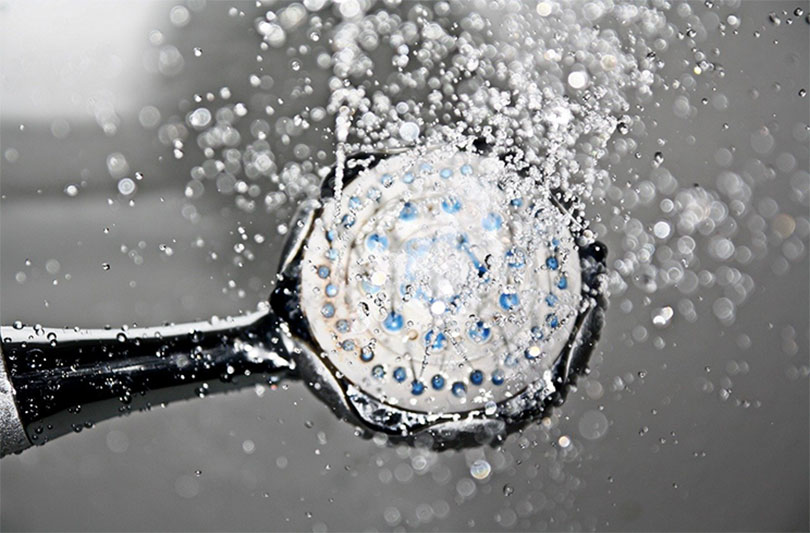
If you’re in East Anglia and you’ve got hard water, spending £40 on a shower head and expecting soft water is £40 you won’t get back.
The same money over a couple of years buys the salt for a real softener, and that treats every tap, the boiler, the washing machine, the dishwasher and the kettle as well as the shower. Our page on the benefits of a water softener sets out what actually changes, and the price guide covers what a proper install costs.
If a softener genuinely isn’t possible in your situation, buy a shower filter, buy it for the chlorine, and don’t expect it to touch the limescale. That’s a reasonable purchase made with your eyes open.
What I’d rather you didn’t do is buy the shower head, assume the hard water problem is solved, and let the boiler keep scaling up quietly in the background. That’s the version that costs real money, and it’s the one I get called out to two years later. Our post on hard water plumbing problems covers what that damage looks like.
Frequently asked questions
Do water softener shower heads actually work?
Not as softeners. Softening requires ion exchange, which needs a resin bed, a salt supply and a drain connection, and a shower head has none of those. What these products genuinely do is filter chlorine, chloramine and some sediment, which can help with dry skin. They will not stop limescale forming on your screen, tiles or shower head.
Will a shower filter stop limescale?
No. The calcium and magnesium that form limescale pass straight through a filter cartridge. The only way to stop scale forming is to remove those minerals, which means a softener fitted to your rising main.
What’s the difference between a shower filter and a water softener?
A shower filter treats one outlet and targets chlorine, chloramine and particles. A water softener treats the whole house and removes the hardness minerals that cause limescale. They solve different problems, so the right choice depends on whether your complaint is skin and smell, or scale and lather.
Is a shower filter worth it in a rented flat?
Often yes. You can’t plumb a softener into a rented property, and a shower filter screws on and comes off with you when you move. Buy it for the chlorine reduction, check the flow rate before you commit, and factor in the cost of replacement cartridges rather than just the unit.
Speak to Hart Water
Three things worth remembering.
A shower head cannot soften water. There’s no resin bed, no salt and no drain, so ion exchange isn’t happening. The word on the packaging is marketing.
A shower filter does a real job, just a different one. Chlorine, chloramine, some sediment. If that’s your problem, it’s a sensible buy.
Scale needs the minerals gone. That means a softener on the rising main, sized to the house.
If you’re in Suffolk, Norfolk, Essex, Cambridgeshire, Hertfordshire or nearby and you want a straight answer on whether you need a softener, a filter or neither, I’m happy to come and test your water. We’re family-run. My wife Jackie and my son Jack work alongside me. We don’t do pressure sales, and if a shower filter is all you need, I’ll tell you that too.
Book a free, no-obligation survey

- Water Softener Shower Heads - September 4, 2026
- Water Softener vs Water Conditioner - July 7, 2026
- Water Softener Price Guide UK: Real Installation Costs in East Anglia - May 7, 2026


